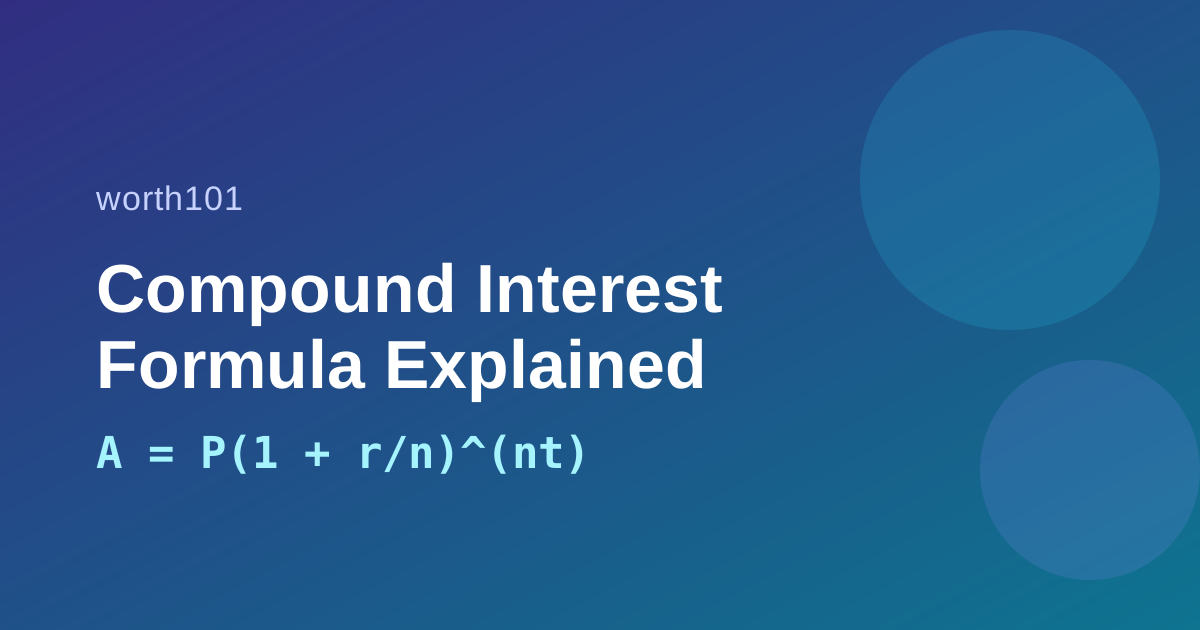
Compound Interest Formula Explained (With Examples)
The compound interest formula is A = P(1 + r/n)^(nt). See a worked $5,000 example, monthly contributions, and how to solve for rate or time.

The compound interest formula is A = P(1 + r/n)^(nt). See a worked $5,000 example, monthly contributions, and how to solve for rate or time.
APY reflects compounding; a stated interest rate does not. See how 5% becomes 5.12% APY and which number to enter in a compound interest calculator.
Nominal return ignores inflation; real return does not. See the formula, why a ~10% return is closer to ~7% after 3% inflation, and which number to plan with.
Simple interest earns only on your principal; compound interest earns on principal plus past interest. See a side-by-side table and when each one helps you.
Slow FIRE reaches real financial independence on a 15–25% savings rate, not 50–70%. See how your savings rate sets the timeline and where Coast FIRE fits in.
The types of FIRE — Lean, Regular, Chubby, Fat, Coast, and Barista — all run on one formula: annual spending divided by your withdrawal rate. See which fits.
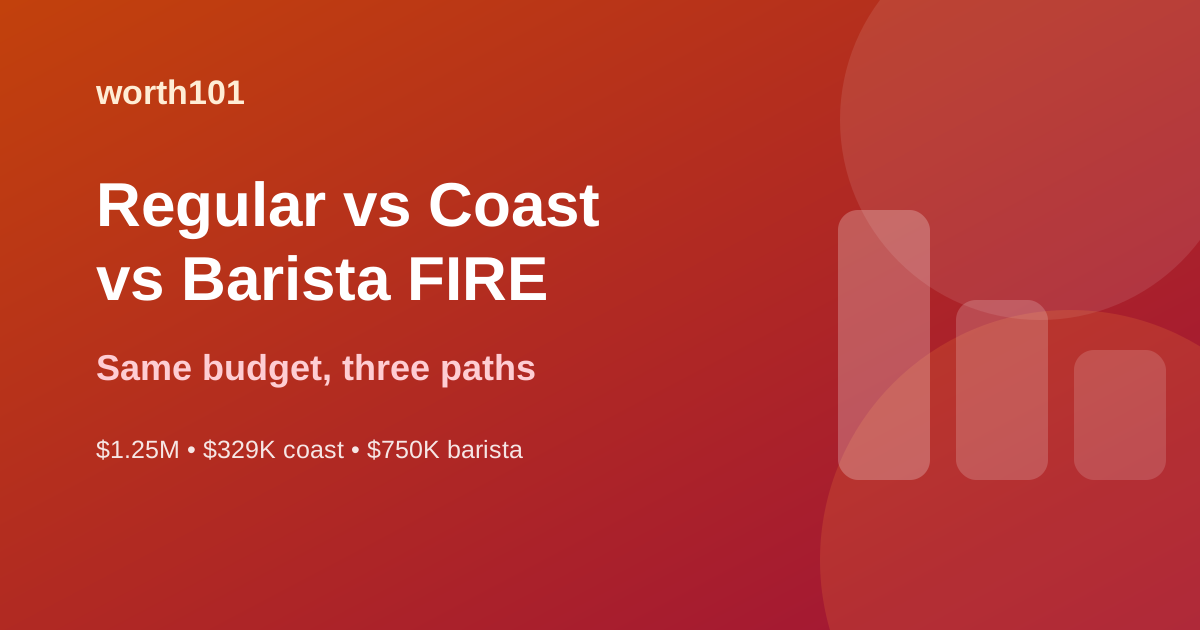
Regular FIRE needs the full portfolio, Coast FIRE lets you stop saving early, and Barista FIRE uses part-time income to shrink the number. Compare all three.
Coast FIRE means stop saving and let compounding finish the job; Barista FIRE means part-time income covers part of spending. See which path fits your plan.
The Roth conversion window is the low-income gap years between your last paycheck and RMDs. Learn how to fill the 12% bracket without hitting the 2026 ACA cliff.
Hitting your FIRE number is step one. This pre-quit checklist covers healthcare, account access before 59½, withdrawal order, debt, and a 2 to 3 year cash buffer.
HSA vs Roth IRA for FIRE: both grow tax-free, but the HSA adds a deduction and FICA savings, while the Roth IRA gives anytime access to your contributions.
The HSA reimbursement strategy lets you pay medical bills in cash, save receipts, and reimburse yourself tax-free decades later while the HSA stays invested.
Retiring at 45 on $60,000 a year needs about $1.71M to $1.85M, not $1.5M — plus a 20-year healthcare bridge and a way to reach your money before 59½.
FIRE with a mortgage works, but a $1,500/month payment adds about $514,000 to your number at 3.5%. See the math, the hidden costs, and five housing paths.
Geographic arbitrage for FIRE can cut your number by about $1M by moving to a lower-cost area — but property taxes, healthcare, and cars offset the win.
Mini-retirement vs FIRE: one is a funded 3–12 month break; the other is a portfolio designed to make work optional. See the real math and risks of each.
The Rule of 55 unlocks penalty-free 401(k) withdrawals if you leave your job at 55+. See the 5 conditions, the IRA-rollover trap, and how it fits a FIRE plan.
Roth conversion ladder vs 72(t): one is flexible but needs a 5-year bridge, the other gives any-age access but locks your payments. See which fits your retirement age.
RMDs start at 73 or 75, but FIRE savers in their 30s set the size of that tax bomb today. See how pre-tax compounding builds it and how the conversion window defuses it.
A taxable brokerage bridge funds spending before age 59½, while your 401(k) and IRA stay locked. See how to size it, control MAGI, and why FIRE depends on it.