

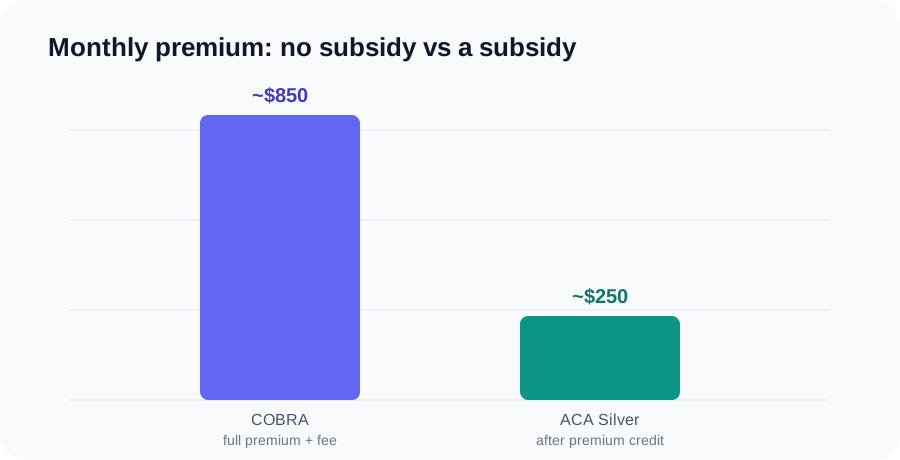
For many low-MAGI early retirees, a subsidized ACA Marketplace plan can beat COBRA — because COBRA has no subsidy and you pay the full premium plus up to a 2% administrative fee, often $600 to $1,400 a month for one person. A FIRE household that qualifies for premium tax credits may find a Marketplace plan for a fraction of that. But COBRA still wins in a few specific situations, and a smart transition uses the rules of both to your advantage.
When you leave a job, you lose employer coverage and have to bridge to Medicare yourself. The choice is usually between continuing your old plan through COBRA or buying a new plan on the ACA Marketplace. This guide compares the two on cost, timing, and the practical reasons to pick each — plus the 60-day window that lets you keep both doors open.
COBRA vs ACA at a glance
| COBRA | ACA Marketplace | |
|---|---|---|
| Who pays | You pay 100% of premium + up to 2% fee | You pay net of premium tax credit |
| Typical cost (single) | ~$600–$1,400/month | Often far less with a subsidy |
| Subsidy available | No federal subsidy | Yes, if income qualifies |
| Keeps your exact plan | Yes — same network, same deductible progress | No — new plan, deductible resets |
| Maximum duration | 18 months (36 in some cases) | Ongoing, year to year |
| How long to decide | 60 days to elect, ~45 more to pay | 60-day Special Enrollment Period |
The single biggest difference is the subsidy. COBRA continues your employer plan, but you now pay the entire premium your employer used to share — which is why it so often looks shockingly expensive. The ACA plan can be cheap for a FIRE household precisely because subsidies are based on income, and early retirees usually report low ACA MAGI.
Why the ACA usually wins for FIRE
Premium tax credits are tied to income, not net worth, so an early retiree drawing on Roth money, cost basis, and modest taxable income can qualify for substantial help. Losing job-based coverage also triggers a 60-day Special Enrollment Period, so you can enroll in a Marketplace plan right away without waiting for open enrollment.
For a household able to control MAGI, the ACA route also unlocks cost-sharing reductions on a Silver plan under 250% FPL — protection COBRA cannot match at any price. The catch is 2026: with the enhanced subsidies expired and the cliff back, the ACA advantage shrinks if your MAGI lands high. So the comparison genuinely depends on your projected income.
When COBRA is the better choice
COBRA is not a mistake — it is the right call in a handful of situations:
- You already met most of your deductible. If you leave mid-year having already paid down a large deductible, a new ACA plan resets it to $0. Continuing the same plan through COBRA preserves that progress for the rest of the year.
- You are mid-treatment with a specific doctor or network. If you are in the middle of care and your providers are not on any available Marketplace plan, COBRA keeps your exact network intact.
- You need a short bridge. If you are days or weeks from another coverage source — a spouse's plan, a new job, or Medicare — COBRA can cover a brief gap cleanly.
- Your projected MAGI is high in 2026. If you expect to land above 400% FPL this year and lose the premium credit, the ACA's cost edge narrows, and keeping your known plan may be worth it.
Use the 60-day window carefully
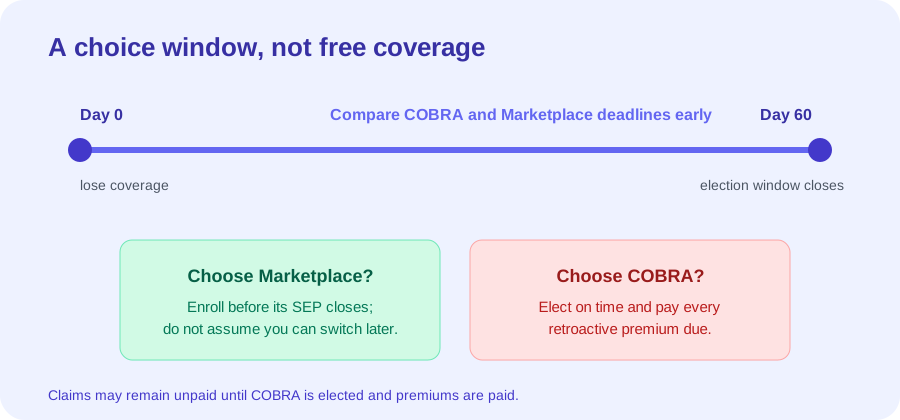
COBRA generally gives you 60 days to elect coverage. If you elect it within the window and pay the required retroactive premiums, coverage can reach back to the day your prior coverage ended. The Department of Labor explains that the first payment is generally due within 45 days after election.
Waiting can preserve a choice, but it is not free coverage. Claims may remain unpaid until you elect and pay every premium due, and the Marketplace Special Enrollment Period is also time-limited. Compare plans early enough to meet both deadlines; do not wait for a medical event and assume an ACA plan will still be available.
The COBRA Special Enrollment trap
One rule trips people up: voluntarily dropping COBRA does not trigger a Special Enrollment Period. If you elect COBRA and later decide it is too expensive, you generally cannot switch to a Marketplace plan until open enrollment — unless your COBRA naturally runs out or you have another qualifying event. Letting COBRA exhaust at the end of its 18 months does trigger a SEP; quitting it early does not.
The lesson: decide before you elect. If the ACA plan is likely your long-term answer, enroll in it during your initial 60-day SEP rather than electing COBRA first and trying to switch later. This is exactly the kind of avoidable error covered in the biggest FIRE planning mistakes.
A simple decision process
- Project your MAGI for the year. Low MAGI usually means a strong ACA subsidy and a clear win over COBRA.
- Check your deductible progress and active care. Heavy mid-year spending or an ongoing treatment with a specific network can tip you toward COBRA.
- Price both. Get the COBRA premium from your employer and price Marketplace plans with your real ZIP code and projected income.
- Use the window wisely. If unsure, delay within the 60-day COBRA election period rather than electing early and losing ACA flexibility.
COBRA vs ACA for early retirement FAQ
Is COBRA or ACA cheaper for early retirees?
Usually the ACA, because premium tax credits are based on income and early retirees often report low MAGI. COBRA has no federal subsidy, so you pay the full premium plus up to a 2% fee. The ACA edge shrinks if your 2026 MAGI exceeds 400% FPL.
Can I keep my doctor if I switch to an ACA plan?
Only if your provider is in the new plan's network. COBRA continues your exact employer plan and network; an ACA plan is new coverage, so check provider networks before switching, especially mid-treatment.
Does switching to an ACA plan reset my deductible?
Yes. A new plan starts your deductible and out-of-pocket spending at $0 for the year. Continuing the same plan through COBRA preserves the deductible progress you already made, which can favor COBRA if you switch mid-year after heavy spending.
Can I drop COBRA and switch to the ACA later?
Not freely. Voluntarily dropping COBRA does not create a Special Enrollment Period, so you generally must wait for open enrollment. COBRA running out at the end of its term does trigger a SEP. Decide before you elect.
What to read next
This article reflects federal COBRA and ACA rules for 2026 coverage. Premiums, subsidy eligibility, networks, and election windows vary by employer, household, state, and future policy changes; the cost figures shown are illustrative. This content is educational and is not tax, legal, medical, or financial advice.