

The ACA subsidy cliff is back for 2026: if your income lands even $1 above 400% of the federal poverty level, you can lose the entire premium tax credit. For a single early retiree that line is $62,600; for a couple it is $84,600 in the contiguous states. The enhanced subsidies that softened this cliff from 2021 through 2025 expired on December 31, 2025, and as of June 14, 2026, no replacement has been signed into law.
That makes 2026 a genuinely different planning year than 2025 was. A FIRE household that coasted just over 400% FPL last year and still got help can now face a five-figure premium jump for the same income. This article explains exactly what changed, the dollar stakes, and what an early retiree should do about it now.
What changed for 2026
The original Affordable Care Act offered premium tax credits to households between 100% and 400% FPL, and nothing above that — a true cliff. The American Rescue Plan (2021) temporarily removed the cliff and capped the benchmark Silver premium at 8.5% of income; the Inflation Reduction Act extended that through the end of 2025. Both of those enhanced provisions expired on December 31, 2025, so the pre-2021 rules — including the 400% FPL cliff — apply again to 2026 coverage.
Two other 2026 changes matter for early retirees specifically. The applicable percentages — the share of income you are expected to pay before a credit kicks in — rose at every income band under IRS Revenue Procedure 2025-25. And the cap on repaying excess advance credits is gone for households at or above 400% FPL, so an income surprise can turn into a full repayment at tax time.
| Household size | 400% FPL (2026 coverage) | Cliff risk if MAGI exceeds it |
|---|---|---|
| 1 person | $62,600 | Full premium tax credit lost |
| 2 people | $84,600 | Full premium tax credit lost |
| 3 people | $106,600 | Full premium tax credit lost |
| 4 people | $128,600 | Full premium tax credit lost |
These thresholds use the 2025 federal poverty guidelines that apply to 2026 Marketplace savings, for the 48 contiguous states and D.C. Alaska and Hawaii use higher figures.
The dollar stakes of one extra dollar
The cliff is brutal precisely because it is a cliff, not a ramp. Consider a 60-year-old whose premiums are expensive because of age. KFF modeled a 60-year-old earning roughly $62,000 (about 396% FPL) paying around $6,175 a year for a benchmark Silver plan, while the same person at $64,000 (about 409% FPL) would pay the full premium — roughly $14,931 with no credit at all. That is nearly $8,800 more for about $2,000 of extra income.
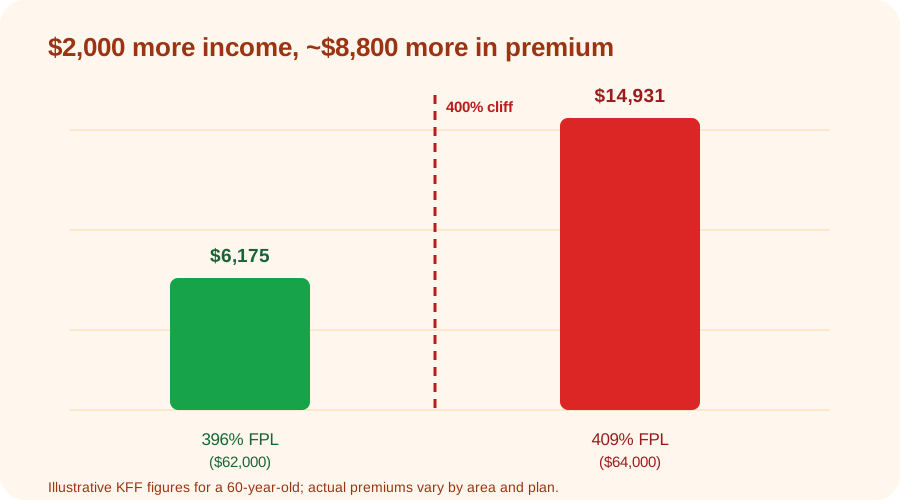
For couples near 65 the numbers can be larger still. The Bipartisan Policy Center illustrated a 60-year-old couple at about 402% FPL (around $85,000) potentially paying roughly $22,600 a year — about a quarter of their income — instead of the 8.5% cap that applied under the enhanced rules. The effective marginal cost of the dollars that pushed them over the cliff is extraordinary.
Premiums and applicable percentages both rose
Even below the cliff, 2026 costs more. KFF estimated that expiration would more than double what subsidized enrollees pay — a roughly 114% increase, from an average of about $888 in 2025 to about $1,904 in 2026. KFF also reported a median requested gross premium increase near 18% for 2026. So a household at, say, 200% FPL that paid close to 2% of income in 2025 is expected to pay closer to 6.6% in 2026.
The takeaway for FIRE: do not build a plan that assumes 2025-era generosity. The cushion is thinner and the cliff is sharper, so MAGI discipline matters more than it has in years.
Where the law stands on June 14, 2026
This is a fast-moving area, so treat any single headline with caution. As of June 14, 2026, the enhanced credits have expired and no extension has been enacted.
Practically, that means: the 400% FPL cliff applies to 2026 today. If Congress later passes and the President signs an extension, the rules could change — possibly even retroactively for 2026 — but you cannot plan around a bill that has not become law. Check HealthCare.gov and your state Marketplace at enrollment for the rules in force.
What FIRE households should do now
The cliff rewards planning and punishes autopilot. Five concrete moves:
- Know your exact cliff number. Look up the 400% FPL figure for your household size and write it down. Every withdrawal decision this year is measured against it.
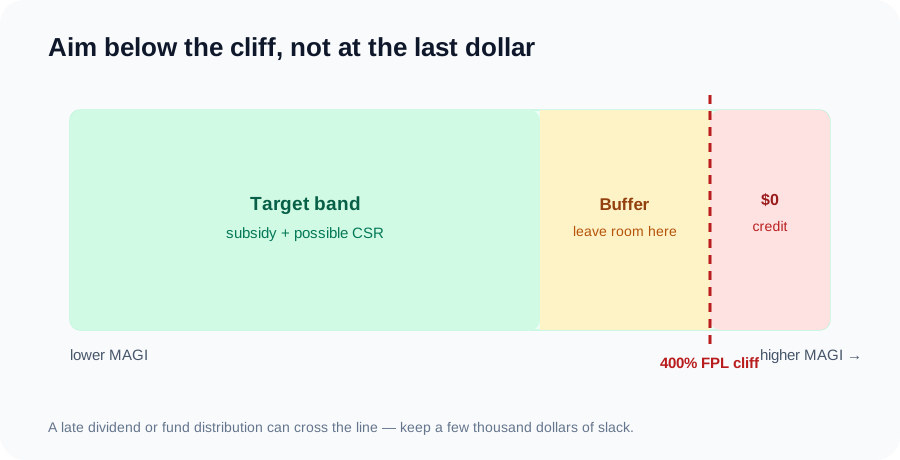
- Leave a real buffer. Year-end mutual-fund distributions, late dividends, and surprise capital gains can arrive in December. Targeting MAGI a few thousand dollars below the cliff protects you from a small overshoot wiping out the whole credit.
- Use low-MAGI cash sources. Roth IRA contribution basis, taxable-account basis, cash savings, and qualified HSA reimbursements can fund spending without raising AGI or ACA MAGI. Other Roth IRA distributions belong in this bucket only to the extent they are not taxable under the Roth ordering and five-year rules. A clear picture of what counts toward MAGI is the foundation here.
- Size Roth conversions to the cliff, not the tax bracket. A conversion that looks cheap in the 12% bracket can cost 40%+ once you add lost subsidies. Convert up to your MAGI target, then stop.
- Have a policy hedge. Because the law is uncertain, some early retirees keep MAGI flexible or consider part-time work with employer coverage, so a single policy outcome does not break the plan.
This is also a good moment to pressure-test the whole plan, because the cliff is exactly the kind of fragile assumption that breaks a FIRE budget when everything has to go right. See the biggest FIRE planning mistakes for the broader pre-quit review, and the FIRE checklist before quitting your job, where pricing this coverage is the first gate.
2026 ACA subsidy cliff FAQ
Is the ACA subsidy cliff actually back in 2026?
Yes. The enhanced premium tax credits expired on December 31, 2025, so the pre-2021 rules apply to 2026 coverage. Above 400% FPL, households generally lose the federal premium tax credit entirely unless Congress enacts a change.
How much does going over 400% FPL cost?
It depends on age, location, and plan, but it can be thousands to tens of thousands of dollars a year because you lose the full credit, not a prorated amount. Older enrollees with expensive benchmark premiums face the largest cliffs.
What is the repayment cap change?
For tax years after 2025, the cap on repaying excess advance premium tax credits is removed for households at or above 400% FPL. If you take advance credits and then exceed 400% FPL, you may owe the entire excess back at tax time.
Will the enhanced credits be extended?
Unknown as of June 14, 2026. No extension has been enacted. Plan around current law and watch HealthCare.gov and Congress for changes that could apply retroactively.
What to read next
Healthcare law is changing quickly; this article reflects federal rules and the legislative status as of June 14, 2026. Subsidy amounts are illustrative and depend on age, location, and the local benchmark Silver premium — price actual plans on HealthCare.gov or your state Marketplace. This content is educational and is not tax, legal, medical, or financial advice.