

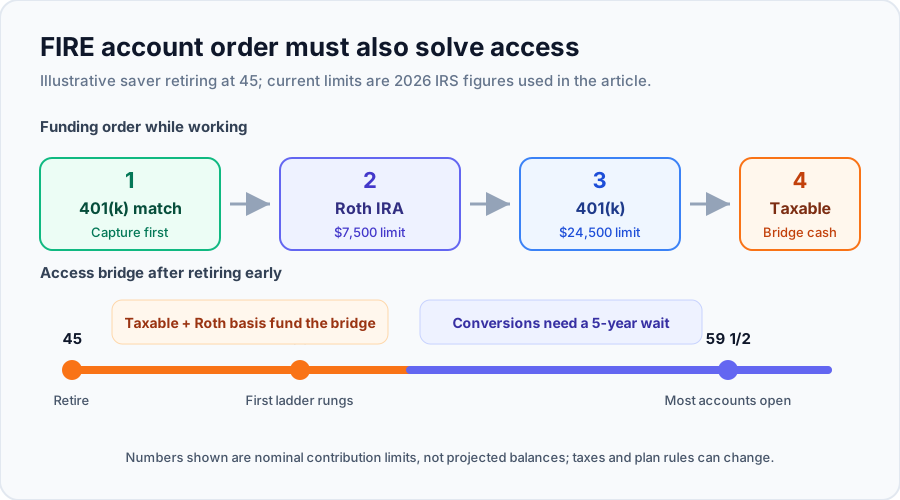
For early retirement the order is: capture your full 401(k) employer match first, then fund a Roth IRA, add more to your 401(k), and build a taxable brokerage bridge. That is a useful default, not a universal rule: your tax bracket, plan fees, Roth IRA eligibility, and years until early retirement can change the best order.
The accounts at a glance
IRS contribution limits change periodically. The table uses the current 2026 limits, pulled from the same configuration as our calculators, so the strategy remains useful when the numbers change.
| Account | Tax treatment | Current limit | Best for FIRE |
|---|---|---|---|
| 401(k) match | Pre-tax | Up to the match | Instant 50–100% return — always first |
| Roth IRA | Tax-free growth | $7,500 ($8,600 if 50+) | Contributions withdrawable anytime; tax-free in retirement |
| 401(k) | Tax-deferred | $24,500 ($32,500 if 50+) | Biggest tax break; needs a ladder for early access |
| Taxable brokerage | Taxed yearly | No cap | The bridge that funds the years before 59½ |
Traditional vs Roth contributions
A 401(k) describes the account, while Traditional and Roth describe when you pay income tax. Many employers offer both Traditional 401(k) and Roth 401(k) contributions. IRAs also come in Traditional and Roth versions.
| Contribution type | Tax now | Tax later | Often attractive when |
|---|---|---|---|
| Traditional | Potential deduction today | Withdrawals taxed as income | Your current marginal rate is higher than your expected retirement rate |
| Roth | Pay income tax today | Qualified withdrawals are tax-free | Your current rate is relatively low or you value tax-free flexibility |
High earners often favor Traditional 401(k) contributions for the current deduction, then convert some of that money during lower-income early-retirement years. This is a tax planning decision, not simply a choice between a 401(k) and a Roth IRA.
Why early access matters
A traditional retiree may not need portfolio income until their 60s. A FIRE investor who retires at 45 has a 14½-year gap before age 59½, when most retirement-account withdrawals avoid the 10% early-distribution tax. That gap is why account location matters almost as much as the total invested.
- Roth conversion ladder. Convert 401(k) money to a Roth IRA in chunks; each taxable conversion has its own five-year waiting period before penalty-free access. A taxable account or Roth contribution basis can fund the first five years. Our Roth conversion ladder guide walks through a full example.
- 72(t) / SEPP. Take substantially equal periodic payments for at least five years or until 59½, whichever is longer. Rigid, but penalty-free.
- Roth contributions. Under the Roth ordering rules (IRS Publication 590-B), your own Roth IRA contributions come out first — before earnings or converted amounts — so contribution basis is generally available anytime, tax- and penalty-free.
Other exceptions can apply, including the Rule of 55 for some workplace plans. Early-access rules are detailed and mistakes can create taxes or penalties, so verify the plan with a qualified tax professional before executing it.
Why this order works for FIRE
- Capture the full employer match. Turning down a 50% match to chase tax-free growth leaves a guaranteed return on the table.
- Fund a Roth IRA if eligible. It offers tax-free growth, broad investment choice, and accessible contribution basis.
- Add more to the 401(k). Its larger contribution room and potential current deduction do the heavy lifting.
- Build a taxable brokerage bridge. Do this before retirement, not only after every retirement account is maxed, if your bridge years would otherwise be underfunded.
Example: a 30-year-old FIRE saver
Suppose Maya earns $100,000, receives a 5% employer match, and targets a 25% savings rate, or $25,000 per year. A practical first-year allocation could be:
- Contribute $5,000 to the 401(k) to capture the full match.
- Fund the Roth IRA up to the current $7,500 limit, if eligible.
- Put the remaining $12,500 into the 401(k) or split part into taxable investments.
If Maya expects to retire at 45 with five years of expenses needed before a Roth conversion ladder is available, she should start building the taxable portion sooner. The right allocation is the one that balances tax savings today with spendable money in the bridge years.
Why FIRE investors still need taxable accounts
A taxable brokerage account lacks the special tax shelter of a 401(k) or IRA, but it has no retirement-age restriction, no contribution cap, and no early-withdrawal penalty. It can fund the first five years of a conversion ladder, cover irregular expenses, and give you room to manage taxable income for health-insurance subsidies and conversions. At larger balances, the three buckets also become the foundation of Fat FIRE tax planning.
Common mistakes
1. Putting everything in a 401(k). Without a taxable or Roth bridge, you can be a millionaire on paper at 45 with no penalty-free cash to spend.
2. Skipping the match to fund a Roth. The match is an instant return; capture it before optimizing tax treatment.
3. Treating “taxable last” as an absolute rule. Maxing every retirement account can still leave an early retiree without enough accessible bridge money.
Frequently asked questions
Should I skip a Roth IRA if I have a 401(k)?
Usually not automatically. After capturing the employer match, a Roth IRA can add flexible investment choices and accessible contribution basis. Income limits and your tax strategy may change the answer.
Can I retire early using only a 401(k)?
It is possible using strategies such as a Roth conversion ladder, 72(t)/SEPP, or an applicable Rule of 55. In practice, a taxable or Roth contribution bridge usually makes the plan more flexible.
What is a Roth conversion ladder?
It is a series of annual conversions from pre-tax retirement money to a Roth IRA. You pay income tax on each conversion, then wait five tax years before withdrawing that converted amount without the early-distribution penalty. See our Roth conversion ladder guide for a year-by-year example.
Do I need a taxable brokerage account for FIRE?
Not in every plan, but most early retirees benefit from one because it provides unrestricted bridge money and more control over taxable income.
Should high earners prioritize Traditional or Roth accounts?
High earners often benefit from a Traditional 401(k) deduction, especially if they expect lower-income conversion years after leaving work. Future tax rates and required minimum distributions also matter.
What to read next
Contribution limits shown are the current 2026 figures. Limits, tax rules, and plan terms can change. This article is educational and does not constitute financial or tax advice.